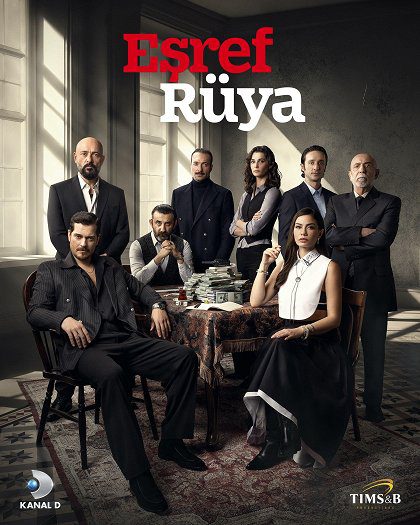
Eşref Rüya – Episode 47 (Part 4): The Aftermath and Legacy
This final part of the series deals with the emotional aftermath of Eşref’s death. It shifts from action to mourning, remembrance, and ultimately hope. The episode shows how Eşref’s family and friends cope with their loss, how his legacy continues, and ends with a beautiful, bittersweet resolution that honors his memory.
Main Plot Points
The episode opens at the crime scene. A prosecutor confirms that the “Old Man” (codenamed “Plak”) is dead inside. But the question on everyone’s mind is: Is Eşref dead too? The answer comes quickly: Yes. Eşref Tekin has died.
What follows is a heart-wrenching scene of grief. Gürdal breaks down completely, shouting at Eşref’s lifeless body: “Why did you do this? Why didn’t you tell us? We were supposed to do everything together! If we were to live, we would live together. If we were to die, we would die together!” He cries that he couldn’t even give him one last hug.
Nisan arrives, desperate to get to Eşref. She is stopped by the police. She speaks to him as if he can still hear her: “You are very tired. Rest. You got very tired. From taking revenge… from trying to protect people… I am here. I will wait for you. I will not go anywhere without you.” She reminds him of his promise that they would grow old together. She begs him not to leave his dream. Rüya, their daughter, appears and asks, “Is it over, father?”
There is a brief, beautiful moment of acceptance. Eşref’s inner voice says: “I am dying, my God. Every death is premature. I know, my God. But this life you gave me… was not bad. Goodbye.”
Then there is a complete shift in tone. Years have passed. Gürdal has become a father figure to many orphan children. He and his wife Gonca have adopted eight children. In a comedic moment, Gürdal panics because one of the children is missing during a headcount. The missing boy, named Eşref, appears – he had gone to spy on the rival team’s football tactics. Gürdal is overjoyed. The family is chaotic, loud, and full of life – exactly what Eşref would have wanted.
A new character is introduced: Harun, an old friend who has been traveling the world. He returns and reunites with the group. Gülümser Hanım (Nisan’s mother) shows everyone a poetry book – she is proud that Eşref was right about focusing on their own lives.
The central moment of this part is the opening of the Eşreftek Youth Foundation. Rüya, now a young woman, gives a speech. She says: “Everyone knew my father’s name differently. Some called him a mobster. Some called him a murderer. Others said he was a bad example for young people. Maybe they were right. Because a person sometimes cannot escape the mistakes they make. My father did not run away either. But if there is one thing I have learned about life, it is this: people are not only good or only bad. My father was both a good man and a bad man. For some, he was a mobster… for others, a hero. For some, a name to be feared… for others, the only hope knocking on their door at night. But for some people, my father was just an orphan. When he grew up, no one held his hand. So for years, he tried to keep others from falling. The children he educated never appeared on television. They never received awards. Because he never wrote his name anywhere. Perhaps today it will be written for the first time. I never knew my father. I don’t remember his voice. But when I look at the lives of the people he left behind, I see a man who fought the darkness inside him his entire life. That is why this foundation exists – not to erase a man’s sins, but to show that the good inside people can live on even after they die. Some people may not live right, but they can leave right things behind.”
Rüya then thanks everyone: her mother, her grandmother, Gonca, Irmak, Faruk, Gürdal, Hafize, and most of all Ömer abi for never stopping telling her stories about her father. She ends by saying: “I hope the Eşref Tek Youth Foundation will be there for every young person in need of hope.”
After the speech, Nisan gives Rüya a gift from her father: a car – Eşref’s beloved car, which he had kept in a garage all those years. Ömer abi explains that after the incident, he had the car put away and asked that no one touch it. “Eşref would have wanted you to have this car,” he says. Rüya is overwhelmed.
Then comes the most emotional moment of the episode: Eşref’s final video message. He recorded it before his death. In the video, he says: “I don’t know when this video will find you. I hope that when it does, you are still together. I hope Gürdal isn’t bothering anyone. I hope Faruk is living somewhere quietly. I hope Irmak has drawn her own path. I will probably die here tonight. I am not afraid. I have been ready for this for a long time. I am just sorry to be separated from the woman I love, from my unfinished love with my dream. I hope you forgive me. In this life, I had two dreams. I searched for one for years. But life had already put her in front of me. Apparently… Nisan… was my dream. A heart truly loves only once. At least mine does, Nisan. You are my first dream in life. I didn’t tell you this because the bond between us had long surpassed Eşref and the dream. I couldn’t even imagine that a person could love another person so much. The years I spent searching for you… and then suddenly having you in front of me… it was like a miracle life owed me. Something stronger than who we both are.”
He apologizes for breaking many hearts but says he protected Rüya from himself. He thanks Rüya for extending his life and letting him see a new dream. He then speaks directly to his young daughter (as if in a dream, referring to the piano-playing vision he had when he was shot in the head): “I don’t know how small you are. I hope you are still small. I hope you still play piano. I hope you never upset your mother. When they shot me in the head, we met for the first time. You were playing piano at the edge of a cliff. You said, ‘Don’t go, stay here with me. If you leave, it will hurt you a lot.’ I said, ‘I promised your mother, my daughter.’ You didn’t let me go. Every time I fell, you picked me up again. You brought me back to life. Maybe you weren’t real. But I listened to you as if you were real. You hugged me as if you were real. Thank you for everything, my daughter. I will take many memories of you with me tonight. I am sorry for what we couldn’t live. But I am happy for every moment I lived with you.”
He ends the video: “My love. My dear daughter. My brothers. If possible… I will continue to be with you. Eyvallah.”
After the video, Nisan takes Rüya to a country road – Eşref’s favorite road. She reveals that when she was pregnant with Rüya, she and Eşref stayed in a house there. Eşref would come to this road whenever he was sad or needed hope. Rüya plays a cassette from the car – Eşref’s favorite song. The song plays over the final scenes: “I can’t forget you, my dear.”
The episode ends with Rüya looking at the road, her mother beside her, the car behind them – a symbol of her father’s enduring love.
Main Characters in This Part
-
Eşref: The deceased protagonist. He appears via flashback and a final video message.
-
Nisan: Eşref’s widow. She is strong, grieving, but focused on raising Rüya.
-
Rüya: Eşref’s daughter, now a young woman. She gives a powerful speech and accepts her father’s legacy.
-
Gürdal: Eşref’s loyal friend. He becomes a father to many orphans.
-
Gonca: Gürdal’s wife. She supports their large adoptive family.
-
Ömer abi: An old friend who kept Eşref’s secrets and his car.
-
Gülümser Hanım: Nisan’s mother. She shows pride in Eşref’s impact.
-
Harun: An old friend returning from travels.
-
The children: Eight adopted children, including one named Eşref.
How This Part Ends (The Finale)
The series ends on a hopeful, peaceful note. Eşref is dead, but his legacy lives on through his family, his foundation, and the children he helped. Rüya accepts her father’s love and his flaws. The final image is of Rüya on Eşref’s favorite road, with his car, listening to his favorite song. She is surrounded by family – her mother, Gürdal, Gonca, and the children. The cycle of violence is broken. What remains is love, memory, and the good that Eşref did despite his darkness. The final message is that a person can leave behind something right – even if they didn’t always live right.