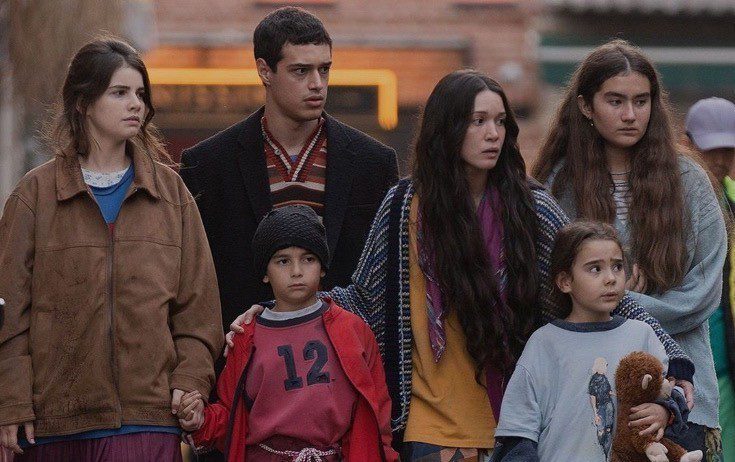
The Metaphysics of Mystery: Deconstructing Osman’s Unpredictability in Homeless Episode 165 Promo
Prologue: The Unknowable Man
In the vast pantheon of television antiheroes, enigmatic figures, and narrative wild cards, few characters have mastered the art of strategic opacity quite like Osman. The assertion that “Homeless Throughout the Series, Osman Has Often Been Difficult to Predict. Episode 165 PROMO Reinforces This Characteristic More Than Ever” is not merely a promotional tagline—it is a philosophical statement about the nature of character construction in modern drama. Episode 165’s promotional trailer does not simply advertise an episode; it offers a meditation on uncertainty itself.
This analysis will journey beyond surface-level speculation, delving into the psychological architecture of Osman’s unpredictability, the narrative function of mystery, the cultural phenomenon of fan theorizing, and the existential weight of a character who refuses to be categorized. We will explore why Osman’s elusiveness is not a weakness but the very engine of the series’ continued vitality.
Part I: The Anatomy of Unpredictability – What Makes Osman Different
A Taxonomy of Character Types
To appreciate Osman’s uniqueness, one must first understand the spectrum of character predictability in serialized drama. Most television characters fall into one of three categories:
-
The Transparent Hero – Motivations are clear, actions are foreseeable, and emotional responses align with established moral codes.
-
The Tragic Flaw Figure – Predictable in their weakness; audiences know they will succumb to pride, jealousy, or fear.
-
The Redemption Seeker – Trajectory is linear; every action moves toward atonement.
Osman belongs to none of these categories. Instead, he occupies a fourth, rarest space: The Deliberate Enigma. His decisions are not random—they are contextual, layered, and often contradictory unless viewed through the correct emotional lens. This is not poor writing; it is sophisticated characterization.
The Architecture of Osman’s Decision-Making
The text correctly identifies several competing priorities within Osman: emotional impulses, protective instincts, strategic calculations, and independent action. What makes this combination volatile is that these priorities are not hierarchical. In one moment, emotion dominates; in another, strategy. The audience can never be certain which Osman will appear.
This internal multiplicity creates a character who feels real. Human beings are not consistent; we are collections of competing selves. Osman’s unpredictability mirrors the unpredictability of actual human behavior, which is why viewers respond to him so viscerally.
Part II: The Promo as Philosophical Artifact
The Epistemology of the Trailer
The Episode 165 promo is not a summary; it is a carefully constructed exercise in controlled revelation. Every image, every half-finished sentence, every fleeting expression is chosen to generate specific emotional responses. The promo’s genius lies in what it does not show. Empty spaces, ambiguous glances, and conversations that begin but never conclude—these are not deficiencies; they are invitations.
The text notes that the promo “presents Osman in situations that raise more questions than answers.” This is precisely its function. A promo that answered questions would be a spoiler; a promo that multiplies questions is a catalyst. The uncertainty is the product.
The Aesthetics of Ambiguity
Several visual and auditory elements within the promo likely contribute to its unsettling atmosphere:
-
Lighting: Shadows across Osman’s face suggest internal division or hidden knowledge.
-
Pacing: Rapid cuts between characters imply fractured relationships.
-
Dialogue snippets: Incomplete sentences mirror incomplete understanding.
-
Silence: What is not said often carries more weight than what is spoken.
These artistic choices transform the promo from a marketing tool into a standalone emotional experience.
Part III: The Functions of Unpredictability in Serialized Narrative
Suspense as Sustenance
The text identifies several storytelling functions served by Osman’s unpredictability: suspense, engagement, investment, prevention of repetition, and encouragement of speculation. Each of these deserves deeper examination.
Suspense: Traditional suspense relies on the audience knowing something the characters do not. Osman’s unpredictability creates a different kind of suspense—the audience does not know, and neither do the characters. Everyone is equally blind, which levels the emotional playing field.
Engagement: A predictable character can be watched passively. An unpredictable character demands active interpretation. Every gesture becomes a clue; every word becomes evidence. Viewers do not merely watch Osman; they analyze him.
Investment: Emotional investment grows when outcomes are uncertain. If we knew Osman would always succeed, we would relax. Because we do not know, we hold our breath. This is the physiology of engagement: uncertainty accelerates the heart.
Prevention of Repetition: Many long-running series grow stale because character arcs become circular. Osman’s unpredictability ensures that no two conflicts resolve identically. The show cannot rely on formula because Osman refuses to follow it.
Encouragement of Speculation: The text notes that “encourages fan theories and speculation” is a function of unpredictability. This is perhaps its most valuable contribution. A show that generates theories is a show that lives in the minds of its audience between episodes. Osman’s mystery extends the viewing experience beyond the runtime.
The Social Psychology of Fan Theorizing
When viewers develop theories about Osman’s next move, they are engaging in a form of collective storytelling. Online forums, social media threads, and casual conversations become extensions of the narrative. The show does not end when the credits roll; it continues in the speculative imagination of its audience. Osman’s unpredictability is the fuel for this secondary narrative economy.
Part IV: The Character Evolution – From Open Book to Closed Vault
The Arc of Opacity
The text traces Osman’s transformation from “reactive, open, trusting, emotional, predictable” to “strategic, reserved, cautious, calculated, unpredictable.” This is not merely character growth; it is a philosophical journey. The early Osman believed that transparency was strength. The current Osman has learned that mystery is power.
This evolution reflects a universal truth: experience teaches discretion. Every betrayal, every disappointment, every moment when openness was punished becomes a brick in the wall of reserve. Osman did not become unpredictable because the writers wanted a twist; he became unpredictable because his history demanded it.
The Cost of Mystery
While unpredictability serves the narrative, it also isolates Osman. The text hints at this cost but does not fully explore it. A person whom no one can predict is also a person whom no one can truly know. Osman’s relationships are strained not despite his mystery, but because of it. The promo’s tension-filled conversations and signs of mistrust are the natural consequences of his chosen opacity.
Part V: The Fan Theory Ecosystem – A Taxonomy of Possibilities
The text presents three primary fan theories: Osman hiding a secret, a major relationship changing, or Osman making a sacrifice. Each theory reveals as much about the audience as it does about the character.
Theory 1: The Hidden Secret
The belief that Osman possesses unrevealed information reflects a desire for narrative justice. Audiences want to believe that confusion has an underlying order—that Osman’s behavior, however erratic, is ultimately rational. The “hidden secret” theory provides that order. It suggests that once the secret emerges, everything will make sense.
Theory 2: The Relationship Shift
The focus on relationship change indicates that viewers see Osman primarily through his connections to others. His identity is relational. A change in relationship would therefore constitute a change in Osman himself. This theory is less about plot and more about identity transformation.
Theory 3: The Sacrifice
The sacrifice theory is the most emotionally resonant. It suggests that beneath Osman’s opacity beats a fundamentally selfless heart. Viewers who favor this theory are invested in Osman’s redemption arc; they want to believe that his unpredictability serves a higher purpose. A sacrifice would validate that belief.
What the Theories Share
All three theories share a common assumption: that Osman’s behavior is meaningful. No theory suggests randomness. This is a testament to the writing; even in his most confusing moments, viewers trust that there is method behind the mystery.
Part VI: Emotional Themes – The Subsurface Currents
Loyalty as a Double-Edged Sword
The text identifies loyalty as a central theme. Loyalty in Homeless is never simple. To be loyal to one person often means betraying another. Osman’s unpredictability may stem from his refusal to choose between competing loyalties. He does not act inconsistently; he acts in accordance with loyalties the audience cannot see.
Trust as a Precious Commodity
Trust is fragile because it is invisible. We cannot measure it; we can only observe its presence or absence. The promo’s signs of mistrust are devastating because they represent the evaporation of something that took years to build. Osman’s unpredictability may be the cause, or it may be a symptom of deeper fractures.
Redemption as an Open Question
The possibility of redemption remains unanswered because redemption requires a stable self to redeem. If Osman is unpredictable, can he truly change? Or does unpredictability preclude the possibility of a coherent redemption arc? These are not flaws in the narrative; they are the narrative’s deepest questions.
Part VII: Narrative Architecture – How Episode 165 Reshapes the Story
The Promo as Structural Turning Point
The text suggests that Episode 165 may feature “completely unexpected twists” and that “the promo feels less like a standalone teaser and more like the beginning of a larger narrative shift.” This is astute. A turning point is not merely an event; it is a reorientation. After Episode 165, the rules of the story may change.
Potential structural shifts include:
-
Power realignments: Who holds influence may change.
-
Moral redefinitions: Previously clear ethical lines may blur.
-
Relationship reconfigurations: Alliances may dissolve or form.
-
Tonal changes: The emotional register of the series could shift.
The Ripple Effect
The text includes a useful table linking possible events to potential impacts. This table can be extended:
| Possible Event | Potential Impact | Emotional Resonance |
|---|---|---|
| Secret Revealed | Major conflict | Shock, betrayal |
| Family Dispute | Emotional drama | Grief, anger |
| Unexpected Alliance | Story expansion | Confusion, hope |
| Sacrifice | Character growth | Catharsis, sorrow |
| Relationship Change | Long-term consequences | Loss, renewal |
Each potential event carries distinct emotional weight. The audience’s investment in specific outcomes determines which event would be most devastating or satisfying.
Part VIII: Audience Reception – The Collective Gasp
The Role of Social Media in Modern Drama
The text notes that “social media discussions have focused heavily on Osman, reinforcing his status as one of the show’s most compelling figures.” Social media has transformed television viewing from a private experience into a public conversation. Episode 165’s promo is not merely watched; it is dissected, shared, memed, and debated.
This collective engagement creates a feedback loop: the more viewers discuss, the more invested they become; the more invested they become, the more they discuss. Osman’s unpredictability is the catalyst for this loop.
The Emotional Vocabulary of Fandom
Fans do not merely react; they articulate. The language used in discussions—words like “shocked,” “betrayed,” “hopeful,” “terrified”—reveals the depth of emotional engagement. These are not casual viewers; these are participants in a shared emotional journey. The promo’s success is measurable not in ratings but in the intensity of the response.
Part IX: The Philosophical Core – Why Unpredictability Matters
The Rejection of Narrative Determinism
Traditional drama often operates on deterministic principles: character plus circumstance equals outcome. Osman’s unpredictability rejects this equation. He is not a function of his environment; he is an agent who transcends it. This is philosophically radical. It suggests that human beings are not merely products of their pasts but creators of their futures.
The Uncertainty Principle of Character
In quantum physics, the observer affects the observed. A similar principle applies to Osman: the act of trying to predict him changes him. When fans theorize about his next move, they are not passive observers; they are participants in a dynamic system. Osman’s unpredictability is not a flaw to be corrected but a feature to be celebrated.
Part X: Predictions Grounded in the Unpredictable
The text offers predictions with probability ratings. While any specific prediction may be wrong, the general direction is clear: Episode 165 will challenge assumptions, provoke emotional responses, and expand the narrative universe of Homeless.
High Probability Predictions
-
Osman will make a decision that surprises even close family members.
-
Emotional confrontations will occur.
-
New information will reshape understanding of past events.
Moderate Probability Predictions
-
A relationship will reach a breaking point.
-
An alliance will form between unlikely characters.
-
A secret will be revealed.
Wild Card Possibilities
-
Osman may remove himself from a situation entirely, creating a power vacuum.
-
A character previously considered minor may become central.
-
The episode may end on a cliffhanger that redefines the entire series.
Conclusion: The Eternal Anticipation
“Homeless Throughout the series, Osman has often been difficult to predict. Episode 165 PROMO reinforces this characteristic more than ever.” This statement is not a complaint; it is a celebration. In an era of predictable formulas and safe storytelling, Homeless dares to embrace uncertainty. Osman is not difficult to predict because the writers are careless; he is difficult to predict because he is human.
The Episode 165 promo does not provide answers because answers would end the conversation. Instead, it provides questions—and questions are the engine of drama. What will Osman do next? Whom will he protect? Whom will he disappoint? What sacrifice is he willing to make? These questions will linger long after the episode airs, echoing through forums, social media feeds, and the minds of viewers.
Episode 165 may not resolve the mystery of Osman. It may deepen it. And that is precisely why audiences will return. We do not watch Homeless to see predictability; we watch to see a man who, like ourselves, is impossible to fully know. Osman is not a puzzle to be solved; he is a journey to be experienced. Episode 165 promises to be a significant milestone on that journey.
The promo has done its work. The anticipation is unbearable. And Osman, as always, remains unknowable—which is exactly how he should be.