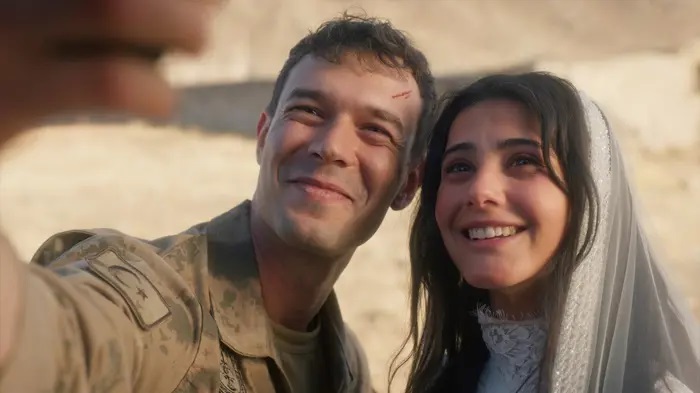
Detailed Summary of the Sevgilim Sensin – Episode 16 Trailer
This second trailer for Sevgilim Sensin – Episode 16 is a powerful, emotionally intense preview that blends love, sacrifice, guilt, and family drama. The trailer opens with a mysterious and somewhat affectionate line: “Sen kuzusun kuzu. Sen kurd” (“You are a lamb, a lamb. You are a wolf”). This paradoxical statement suggests a character who appears innocent and gentle (“lamb”) but has a fierce, dangerous, or unpredictable side (“wolf”). The question that follows—”Nasıl yakıyorsun Dicle?” (“How are you burning, Dicle?”)—adds a layer of pain and passion. “Burning” could refer to emotional suffering, destructive passion, or being consumed by love and guilt.
The scene then shifts to a desperate plea. Someone—likely a male character—begs for a promise: “Hadi bana söz ver. Kimseye abimi ben vurdum demeyeceksin.” (“Come on, promise me. You will not tell anyone that I shot my brother.”) This is a shocking confession. A character has shot his own brother. He is now trying to silence the person who witnessed or knows about it. The person he is speaking to is named Rıka (or possibly a variant like Rıza or Rika). He says: “Tamam mı Rıka?” (“Okay, Rıka?”)
However, Rıka responds with moral resistance: “Ben yalan konuşamam.” (“I cannot tell lies.”) This sets up a powerful conflict between truth and loyalty. The man insists that this time she is forced to lie—for their sake: “Bu sefer mecbursun Dicle. Bizim için.” (“This time you are forced, Dicle. For our sake.”) This suggests that Dicle is the person he is addressing, and he is trying to protect something bigger than himself—perhaps the family, the reputation, or even her own safety. He then says: “Bak bana verdiğin sözü sakın unutma tamam mı?” (“Look at me, don’t forget the promise you gave me, okay?”) His final words in this segment are: “Seni çok seviyorum. Seni çok seviyorum!” (“I love you so much. I love you so much!”) This emotional outburst reveals that his relationship with Dicle is not just one of obligation—it is deeply personal and romantic. He is begging her to lie for him because he loves her, and he may be trying to protect her from the consequences of the truth.
The trailer then cuts to a different tone—a voice filled with frustration and bitterness: “Ya işte bu işler böyle. Şeytan çelmeyi takınca zengini de, fakiri de düşüyor.” (“Well, that’s how these things are. When the devil takes hold, it brings down both the rich and the poor.”) This is a philosophical observation about human nature—when temptation or evil takes over, no one is immune, regardless of social status. The speaker then exclaims: “Yahu bu nasıl bir yüzsüzlük ya?” (“What kind of shamelessness is this?”) This suggests betrayal, dishonesty, or exploitation.
A heated argument follows. One character asks desperately: “Ben nasıl kurtulacağım kızım senden? Söylesene, nasıl kurtulacağım?” (“How am I going to get rid of you, my girl? Tell me, how will I get rid of you?”) This line indicates a toxic or obsessive relationship—someone is clinging, and the other person wants to escape but cannot.
The response is fierce and determined: “Siz benim canımı alana kadar ben vazgeçmeyeceğim. Çünkü benim kocamın bana ihtiyacı var, anladın?” (“Until you take my life, I will not give up. Because my husband needs me, understood?”) This character—a woman—is declaring that she will fight to the death for her marriage. She is relentless and devoted, refusing to be pushed away.
Then comes a moment of emotional revelation. A woman says: “Ben bu hayattaki diğer yarımı buldum abla. İşte o.” (“I have found my other half in this life, sister. That’s him.”) She is declaring her love for someone—perhaps the man who shot his brother, or another character entirely. She then adds: “Onun için her şeyi yaptım.” (“I did everything for him.”) This line is heavy with sacrifice, commitment, and possibly guilt. She has given up everything for love.
Main Characters in This Segment
-
Dicle – A central female character. She is torn between her moral compass and her love for a man who has committed a terrible act (shooting his brother). She is being pressured to lie, but she struggles with the weight of the truth. She is passionate, loyal, and emotionally conflicted.
-
The Man Who Shot His Brother – This character is deeply conflicted. He loves Dicle intensely and begs her to protect him by lying. His action—shooting his own brother—suggests a violent past, possibly tied to family feuds, honor, or criminal entanglements. He is both vulnerable and dangerous.
-
Rıka (or Rıza) – A witness or confidant. She is the person to whom the man says “Tamam mı Rıka?” She represents the moral conscience in the story, refusing to lie, which creates tension.
-
The Devoted Wife – A woman who refuses to give up on her husband. She declares that she will fight until death. Her husband is apparently in need of her, and she is fiercely protective.
-
The Woman Who Found Her “Other Half” – She is deeply in love and has sacrificed everything for her partner. She speaks with conviction and finality, suggesting that her love story is central to the plot.
How This Part Ends
This segment ends on a note of unresolved emotional intensity. The man who shot his brother has extracted a promise from Dicle, but her refusal to lie—and his desperate plea—leave their future uncertain. The philosophical voice about the devil bringing down both rich and poor hints at a larger theme: no one is safe from the consequences of their actions, and everyone will eventually face the fallout.
The devoted wife’s determination and the woman who declared she found her other half both point toward a story driven by love and sacrifice. However, the fact that the trailer ends with “Onun için her şeyi yaptım” (“I did everything for him”) suggests that sacrifices have been made, and the price of love may be more than anyone anticipated.
Overall Conclusion
This trailer paints a picture of a world where love and loyalty are tested by violence, secrets, and moral compromise. The shooting of a brother, the demand to lie, the refusal to give up on a marriage, and the declaration of having found “the other half” all weave together a narrative of intense emotional stakes. The characters are trapped between their feelings and their actions, and the episode promises to explore themes of guilt, redemption, devotion, and the destructive power of love. The final message is that love can make people do anything—even kill, lie, or sacrifice everything—but the consequences will always catch up.